More than steps: How a shared health app quietly strengthened our friendship and well-being
Have you ever tried to get healthier with a friend, only to lose motivation after a week? I did—until we started using a simple health-tracking app together. It wasn’t just about counting steps or water intake; it became a quiet thread connecting our daily lives. We began sharing small wins, cheering each other on, and staying accountable—not perfectly, but consistently. This is how technology, when woven into real relationships, starts to feel less like a tool and more like support. It didn’t transform us overnight, but over time, it changed how we showed up for ourselves and each other. And honestly? That made all the difference.
The Challenge of Going It Alone
Starting a health journey on your own can feel like whispering into the wind. You set a goal—drink more water, walk 10,000 steps, go to bed earlier—and at first, it’s exciting. You download an app, set reminders, maybe even buy a new water bottle with time markers. But then life happens. The kids need dinner. Work emails pile up. The weather turns cold. And slowly, without even realizing it, those good intentions fade into the background.
I’ve been there more times than I can count. I remember one January—like so many others—when I downloaded a fitness app with big dreams. I wanted to move more, eat better, feel stronger. I even set a daily streak goal, proud of my discipline. But by day six, I was ignoring the notifications. By day ten, I uninstalled the app. It wasn’t that I didn’t care. I did. But tracking my progress felt lonely. No one knew when I made it to 9,800 steps. No one celebrated when I skipped dessert. And no one noticed when I gave up.
That’s when I realized something important: health isn’t just about what we do with our bodies. It’s also about what we feel in our hearts. We thrive on encouragement. We grow when someone says, “I see you trying.” We keep going when we know someone else is rooting for us. Motivation fades, but connection lasts. And for me, that missing piece wasn’t another app or a stricter plan—it was a friend. Not a coach, not a guru, just someone who understood the struggle because she was living it too.
So when my longtime friend Lisa mentioned she was feeling stuck with her own routine, I asked her a simple question: “What if we tried doing this together?” Not in a rigid, “we must succeed” way—but gently, like two people holding hands while walking a new path. She laughed and said, “As long as it doesn’t feel like homework.” That’s when we found the app that changed everything.
Finding the Right App—Simplicity Over Features
We both admit we’re not tech experts. We don’t care about heart rate variability or deep sleep percentages. What we wanted was something that felt light, easy, and human. We tried a few popular health apps, but most were overwhelming. One showed a dashboard with so many charts and numbers it looked like a pilot’s cockpit. Another sent push notifications that felt like guilt trips: “You only walked 4,231 steps today. Not even halfway to your goal.” Who needs that kind of pressure first thing in the morning?
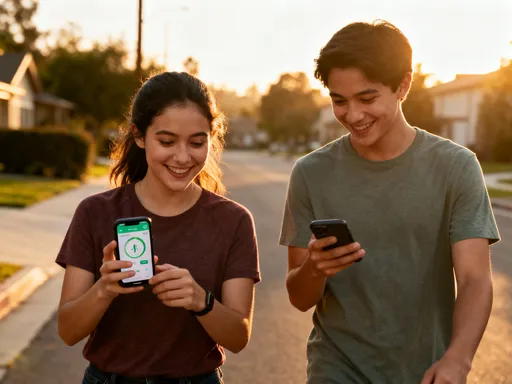
What we needed wasn’t complexity—it was kindness. We wanted something that would help us stay connected without adding stress. Finally, we found an app that felt different. It didn’t bombard us with data. Instead, it focused on a few simple habits: daily steps, water intake, and bedtime. We could sync our goals, see each other’s progress with a quick glance, and send little emoji check-ins—like a thumbs-up, a water drop, or a moon for good sleep.
The magic wasn’t in advanced features. It was in the design. Notifications were gentle: “Lisa just logged her water—great job!” or “You’re close to your step goal—keep going!” No shaming. No red alerts. Just quiet encouragement. And because we could see each other’s activity, it felt like we were on the same team. It wasn’t about competition. It was about companionship.
One evening, I was tired and didn’t feel like walking. But I opened the app and saw Lisa had already hit 7,000 steps. She wasn’t showing off—she just lived nearby and had taken her dog to the park. Still, seeing her progress nudged me. I put on my shoes and walked around the block. Not for fitness. Not for data. But because I didn’t want to be the only one sitting still. That small moment showed me how powerful shared intention can be. The right technology doesn’t push you harder—it pulls you forward with care.
Turning Tracking into a Shared Language
Before the app, Lisa and I talked about life—family, work, weekend plans—but rarely about our daily well-being. We’d say “I’m tired” or “I’ve been stressed,” but we didn’t talk about the small things that shaped how we felt. That changed once we started sharing our health check-ins. A simple “I hit 8K steps—close!” followed by a “You got this 👊” became part of our rhythm. It wasn’t deep conversation, but it was meaningful.
Those little digital exchanges became a new kind of intimacy. We weren’t texting long messages or scheduling calls. We were sharing tiny moments of effort—like waving across the yard. And over time, those waves added up. I started noticing when Lisa logged fewer steps. Not to judge, but to care. One day, I saw she hadn’t moved much and sent a quick “Everything okay?” She replied, “Just a rough morning with the kids,” and suddenly, our health app had opened the door to real support.
What surprised me was how these small habits made us more aware of our own routines. I used to forget to drink water until my head hurt. Now, I pause mid-afternoon and think, “Have I logged my glass?” It’s not about perfection. It’s about presence. And knowing Lisa might see it—might send a “Hydration queen!” emoji—makes me more likely to follow through. The app didn’t change my behavior alone. It gave us a shared language for care.
One Saturday, I forgot to track my walk. Later, Lisa messaged, “I didn’t see your steps today—did you go out?” I laughed and said, “Yes! I just forgot to log it.” She replied, “Well, I’m counting it anyway.” That’s the kind of grace that keeps you going. We weren’t chasing data. We were building trust, one small habit at a time.
Staying Accountable—Without the Pressure
When people hear “accountability,” they often think of strict rules and consequences. Someone watching, judging, maybe even scolding. But our version was softer. There were no penalties for missing a goal. No lectures for skipping a day. If one of us didn’t walk, the other didn’t say, “What happened?” We’d just send a “Rainy day? Same. Tomorrow counts.”
That gentle tone made all the difference. Accountability didn’t feel like pressure—it felt like partnership. We weren’t trying to fix each other. We were simply saying, “I’m here. I see you. I’ve been there too.” The app showed our progress, but it was the human response that kept us going. On days when I felt too tired to move, seeing Lisa’s streak didn’t make me feel guilty. It reminded me that rest is part of the journey too.
There was one week when both of us struggled. I was dealing with a family issue, and Lisa was recovering from a minor surgery. Our step counts dropped. Water logs were spotty. But instead of quitting, we changed our goal. We agreed to just “show up”—even if that meant a five-minute walk or one glass of water. We celebrated logging at all, not how much. And slowly, we got back on track.
The app didn’t demand perfection. It simply reflected reality. And because we saw each other’s effort—not just the numbers—we stayed in it together. That’s the kind of accountability that lasts. Not the kind that shames, but the kind that says, “I know it’s hard. I’m still here.”
Small Wins, Big Shifts in Daily Life
Months passed, and I started to notice changes—not dramatic ones, but real ones. I took the stairs without thinking. I kept a water bottle on my desk and refilled it regularly. I went to bed earlier because I didn’t want to miss my sleep goal. These weren’t grand transformations. They were tiny shifts, but they stuck because I wasn’t doing them alone.
Lisa started packing lunch instead of ordering takeout. She said seeing her “healthy meal” check-in made her feel proud—and she didn’t want to break the streak. One day, she texted me, “I made a salad and actually enjoyed it. Who am I?” We both laughed, but there was truth in it. Small habits, supported by connection, can quietly reshape your life.
The app highlighted our streaks with green checkmarks and little celebrations. But the real motivation came from knowing someone else noticed. One evening, I logged my water and saw Lisa had done the same. I sent a message: “Look at us being adults!” She replied with a laughing emoji and said, “I even walked the dog in the rain today.” We weren’t bragging. We were celebrating the ordinary—because it mattered.
Those moments built a quiet confidence. I started believing I could make better choices, not because I had to, but because I wanted to. And knowing Lisa was doing the same made it feel possible. Progress wasn’t about reaching a finish line. It was about showing up, day after day, with a little more ease and a little more joy.
Beyond Health: How This Deepened Our Friendship
What surprised me most wasn’t the fitness boost or the better sleep. It was how much closer Lisa and I felt. We were talking more—not just about steps or water, but about life. The app became a gateway to deeper conversations. One day, I noticed she hadn’t logged anything and asked, “You seemed off yesterday—everything okay?” She opened up about feeling overwhelmed at work. We ended up having a long talk over coffee—the kind we hadn’t had in years.
Technology often gets blamed for pulling us apart. But in this case, it brought us together. It didn’t replace real connection. It invited it in. We weren’t just friends using an app. We were using an app to be better friends. We checked in not because the app told us to, but because we cared.
Our friendship has always been strong, but this added a new layer. We were now allies in well-being. We celebrated each other’s wins and softened each other’s setbacks. And in a world where so much feels fast and fleeting, that slow, steady support meant everything.
I’ve realized that health isn’t just about the body. It’s about belonging. It’s about knowing someone is walking beside you, even if it’s just through a screen. And when technology helps foster that sense of togetherness, it stops being just a tool. It becomes a quiet companion in your corner.
Making It Work for You—A Gentle Start
If you’re reading this and thinking, “I’d love to try this,” I’ll give you the same advice I’d give a sister or a close friend: start small. Don’t try to track everything at once. Pick one habit—just one—that feels manageable. Maybe it’s walking 20 minutes a day. Maybe it’s drinking three glasses of water. Maybe it’s going to bed 30 minutes earlier. Choose something that matters to you, not something you think you “should” do.
Then, invite someone you trust. It doesn’t have to be a best friend. It could be a sister, a cousin, a neighbor, or a co-worker you chat with at lunch. The key is choosing someone who’s kind, who understands life gets busy, and who won’t make you feel bad for missing a day. This isn’t about perfection. It’s about support.
Look for an app that feels simple and warm. Avoid ones that bombard you with data or make you feel guilty. You want something that feels like a nudge, not a lecture. Set shared goals, but allow room for off days. Celebrate effort, not just results. Send a “You did it!” when your friend logs their walk. Reply with a heart when they drink their water. Let those small gestures build a rhythm of care.
And remember: the goal isn’t perfect health. It’s feeling supported. It’s knowing someone sees your effort. It’s finding joy in the little things—like a green checkmark, a shared emoji, or a text that says, “I noticed.”
Over time, you might find—like I did—that it’s not just about the habit you’re tracking. It’s about the connection you’re building. And that, more than any number on a screen, is what helps you feel stronger, calmer, and more like yourself. So go ahead. Take that first small step. And if you can, take it with someone beside you—even if it’s just in spirit, through a simple app that says, “I’m here.”