I Drove Through Germany’s Black Forest and Found Its Soul Off the Map
Driving into Germany’s Black Forest feels like stepping into a storybook no one told you about. Towering pines, cuckoo clocks ticking in quiet villages, and the smell of fresh pretzels in old stone bakeries — I didn’t expect such authenticity. As I twisted through winding mountain roads, I realized this wasn’t just a scenic drive — it was a journey into centuries-old traditions still alive today. The forest wraps around you, not just with trees, but with stories: of woodcarvers shaping time itself, of grandmothers baking cakes layered with forest cherries, of mountain air so clean it sharpens your thoughts. This is a place where modern life slows, not because it must, but because it chooses to. And the best way to experience it? Behind the wheel, on your own terms, discovering not just what’s on the map, but what lies just beyond it.
Why Self-Driving Transforms the Black Forest Experience
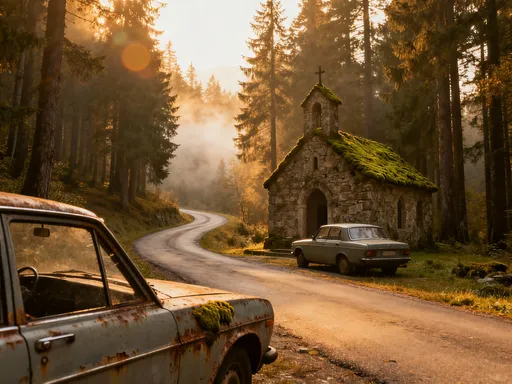
There is a quiet freedom in gripping the steering wheel as the Black Forest unfolds ahead, a ribbon of road curling through emerald hills and misty valleys. Public transportation in Germany is efficient, no doubt, but it operates on schedules and fixed routes — and the soul of the Black Forest does not. This region thrives in the unplanned moments: a sudden decision to pull over at a roadside chapel nestled between fir trees, the impulse to follow a footpath marked only by moss-covered stones, or the joy of arriving at a village square just as the church bell begins to chime. A car grants access to corners of the forest that remain untouched by tour buses and guidebooks, where the only footprints in the morning dew might be your own.
Self-driving allows for a rhythm that mirrors the landscape — slow, deliberate, and deeply personal. You can linger in a sunlit meadow where wildflowers bloom in bursts of purple and gold, or pause at a wooden kiosk selling homemade elderflower lemonade without worrying about missing the next train. In rural areas like the Black Forest, where villages are often separated by steep gradients and dense woodland, road access is not just convenient — it’s essential for meaningful exploration. Regional buses exist, but their routes are sparse, their frequencies limited, and they rarely serve the more secluded hamlets where tradition runs deepest.
Moreover, driving enables travelers to align their journey with natural and cultural rhythms. Imagine arriving at a local market in Haslach on a Tuesday morning, just as farmers are unloading crates of forest mushrooms and jars of wild honey. Or timing your ascent along the Schwarzwaldhochstraße to reach the summit at sunset, when the sky blazes in hues of amber and rose. These are not experiences dictated by timetables, but shaped by intuition and presence — only possible when you control the pace. With a car, you are not merely passing through; you are moving with the land, part of its quiet pulse.
The Heartbeat of Culture: Villages Where Time Stands Still
Scattered across the Black Forest like beads on an ancient necklace are villages where centuries seem to fold into one another. In Triberg, the air hums with the rhythmic tick-tock of cuckoo clocks emerging from family-run workshops. The scent of freshly carved wood lingers in alleyways, and shop windows display clocks adorned with hand-painted edelweiss and deer antlers. Here, time is not measured in minutes but in craftsmanship — each clock taking days, sometimes weeks, to complete. Locals speak a dialect that feels as rooted as the spruce trees, their voices carrying traces of a past that has not been erased, only polished by time.
Gengenbach, with its half-timbered houses painted in soft ochre and deep green, looks like a scene lifted from a fairy tale. During the Christmas season, its medieval square becomes a lantern-lit wonderland, but even in summer, the town exudes a quiet magic. Children play near the fountain while elders sit on benches, sipping apple spritzers and watching the world pass by at a gentle pace. The town’s annual wine festival, held each August, draws families from surrounding valleys who come not for spectacle, but for continuity — to celebrate the same harvest songs and grape varieties their ancestors honored generations ago.
Haslach, quieter and less frequented by tourists, offers a different kind of intimacy. Its narrow lanes wind past centuries-old farmhouses, their roofs weighted with stone tiles to withstand winter snows. In the local tavern, a wood-fired stove crackles even in early autumn, and meals are served on thick ceramic plates passed down through families. Conversation flows easily, especially when visitors show genuine interest in local ways. One elderly resident, peeling potatoes in her sunlit kitchen, shared how her grandmother used to preserve cherries in brandy — a recipe still used today in the making of the region’s famous Black Forest cake. These moments are not performances; they are lived traditions, preserved not out of obligation, but out of love.
Flavors of the Forest: From Black Forest Cake to Craft Beer
The cuisine of the Black Forest is not merely sustenance — it is a narrative written in flavor, soil, and season. Most travelers arrive with one dessert in mind: the legendary Schwarzwälder Kirschtorte, or Black Forest cake. Layers of chocolate sponge, whipped cream, and Morello cherries soaked in kirschwasser — a clear brandy distilled from cherry pits — come together in a harmony that tastes like the forest itself. Yet few realize that the true essence of this cake lies not in its sweetness, but in its ingredients, each rooted in local practice. The cherries are hand-picked in July, the cream comes from pasture-grazed cows, and the kirschwasser is often homemade, its sharp aroma lingering in village cellars.
But the culinary journey extends far beyond dessert. At a Bauernhof outside St. Märgen, a farming family welcomed me into their kitchen, where a pot of Erbsensuppe — yellow pea soup — simmered over a low flame. Served with slices of dark rye bread and chunks of Schwarzwälder Schinken, the dish was simple, hearty, and deeply satisfying. This dry-cured ham, smoked over beechwood for weeks, carries a smoky depth that reflects the forest’s own character. Unlike mass-produced versions, authentic Black Forest ham is made in small batches, using methods unchanged for over a century.
Equally revealing is the region’s craft beer culture. Hidden in valleys and hillside towns are microbreweries drawing water from alpine springs, untouched by pollution and rich in minerals. One such brewery near Freudenstadt uses open fermentation techniques passed down since the 1800s, producing lagers with a crisp, floral finish. Tasting a cold glass on a wooden terrace, surrounded by grazing sheep and distant church spires, you understand how water, grain, and tradition can converge into something transcendent. These flavors do not shout; they whisper — of care, of patience, of a land that feeds its people with quiet generosity.
Scenic Routes That Double as Cultural Pathways
The Black Forest is not just traversed — it is revealed, one curve at a time. The Schwarzwaldhochstraße, or Black Forest High Road, is perhaps the most celebrated route, stretching nearly 60 kilometers from Baden-Baden to Freudenstadt. But its value lies not only in elevation — peaking at over 1,000 meters — but in the cultural tapestry it weaves. Along this route, timber-framed houses stand like sentinels, their carved eaves telling stories of prosperity, faith, and family. Many bear inscriptions in Gothic script, marking the year of construction or the name of the original builder, a testament to pride in permanence.
As the road climbs, vineyards begin to appear on south-facing slopes, where the sun lingers longest. These are not vast commercial operations, but small family plots cultivating varieties like Müller-Thurgau and Pinot Noir. In summer, the vines shimmer in the heat; in autumn, they glow in fiery reds and golds. Some winemakers open their doors to travelers, offering tastings in stone cellars where barrels rest in cool darkness. These encounters are unscripted, born of mutual respect — the vintner eager to share their craft, the traveler eager to listen.
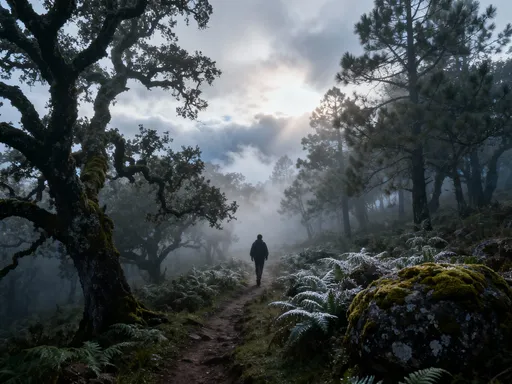
Equally compelling is the Südschwarzwaldstraße, or Southern Black Forest Road, which winds through remote valleys and past glacial lakes. Here, forest shrines — small stone altars adorned with candles and flowers — appear at crossroads and trailheads, silent witnesses to centuries of pilgrimage and prayer. They are not tourist attractions, but living expressions of faith, tended by locals who still pause to light a candle when passing. Driving this route in early morning, when mist clings to the treetops and deer step cautiously onto the roadside, one feels not like a visitor, but like a guest in a world that moves to its own timeless rhythm.
Living Traditions: Meeting Craftsmen and Local Storytellers
Some of the most profound moments of my journey occurred not at landmarks, but in chance encounters sparked by curiosity and a parked car. In a small workshop in Schonach, I met a woodcarver named Herr Müller, whose hands moved with precision over a block of pine, shaping the delicate wings of a cuckoo bird. His family has made clocks since 1823, and he learned the craft from his father, who learned it from his. “It’s not just about keeping time,” he said, sanding the edge of a clock case. “It’s about honoring time — the time it takes to do something well.” His eyes, clouded with age but sharp with focus, reflected a lifetime of dedication.
Later, in a village near Baiersbronn, I stopped to photograph a weathered wayside cross. An elderly woman tending her garden waved me over and began to speak in rapid German, gesturing toward the cross. With the help of a translation app, I learned it had been erected after a young man from the village died in a logging accident in 1911. “We remember,” she said simply. “We always remember.” Her words carried weight — not of sorrow, but of continuity. In a culture that values memory, such markers are not relics, but living threads connecting generations.
These interactions are not staged for tourists. They happen because a car allows you to stop where others rush by, to linger where curiosity leads. A smile, a nod, a shared moment over a cup of tea — these are the currencies of authentic connection. And in the Black Forest, where hospitality is woven into daily life, such exchanges are not rare, but expected. The region does not perform its traditions; it lives them, quietly and without fanfare, in kitchens, workshops, and gardens where time is measured not by clocks, but by care.
Practical Tips for a Smooth and Immersive Journey
Traveling through the Black Forest by car requires preparation, not because the roads are difficult, but because the experience is best enjoyed with respect and awareness. Car rental in Germany is straightforward, with major agencies available at airports and train stations. Opt for a compact or mid-size vehicle — narrow village streets and limited parking make larger cars cumbersome. Automatic transmissions are available but less common; if you're not comfortable with manual, request automatic in advance.
Fuel stations are frequent in towns but sparse in remote areas, so refuel whenever possible. Most operate on an honor system outside business hours — pay at the pump using a credit card, and keep your receipt. Be mindful of speed limits: 100 km/h on rural roads, 50 km/h in villages unless otherwise marked. The Autobahn sections leading to the forest may have no speed limit, but within the region, safety and courtesy matter more than speed.
Navigation is reliable with GPS, but download offline maps as signal can weaken in deep valleys. Paper maps remain useful — many scenic routes are marked with brown tourist signs, and pulling over to consult a map feels part of the adventure. Parking in villages is often free on Sundays and holidays, but on weekdays, look for designated lots or marked zones. Avoid blocking driveways or narrow lanes — locals appreciate consideration.
When visiting small communities, observe local etiquette: keep noise low, especially in the early morning and evening; dispose of trash properly; and greet shopkeepers when entering stores. Many older residents speak limited English, so learning a few German phrases — “Guten Tag,” “Danke,” “Wo ist die Toilette?” — goes a long way. Above all, travel slowly. Let the forest set the pace. This is not a race to see sights, but an invitation to feel them.
Why This Road Trip Stays with You
The Black Forest does not reveal itself all at once. Its beauty is not in grand monuments or dramatic vistas alone, but in the accumulation of quiet moments: the sound of a brook tumbling over stones, the warmth of a handshake from a baker offering a sample of fresh Laugenbrezel, the sight of a farmer guiding sheep down a hillside at dusk. These are not experiences curated for consumption, but glimpses into a way of life that persists, resilient and unshowy.
A self-driven journey through this region fosters a deeper kind of connection — one built on autonomy, presence, and respect. Unlike guided tours, which move from highlight to highlight, driving allows for stillness, for repetition, for returning to a place that called to you. You might find yourself circling back to a meadow where wild strawberries grow, or stopping again at a roadside shrine just to sit and listen to the wind. These choices are yours, and in them lies the true luxury of travel: the freedom to be moved, not managed.
More than any photograph or souvenir, what remains is a feeling — of peace, of continuity, of belonging, even if only for a moment. The Black Forest teaches that culture is not something to be seen, but something to be felt in the bones: in the weight of a hand-carved clock, in the tang of smoked ham on the tongue, in the silence beneath a canopy of ancient trees. It reminds us that some of the most meaningful journeys are not about distance covered, but about depth reached. And sometimes, all it takes is a car, an open road, and the courage to stop — and truly see.