You Won’t Believe What I Ate in Lagos — This Is Next-Level Food Magic
Lagos doesn’t just feed you — it wows you. From smoky suya stands glowing at dusk to bustling markets where spices hit your senses like a rhythm, the city’s cuisine is pure energy. I came for the vibe but stayed for the flavor — bold, unapologetic, and deeply rooted in tradition. This isn’t just eating; it’s a cultural immersion with every bite. Let me take you where the locals eat, far from tourist traps, into the heart of Nigeria’s culinary soul. Here, food isn’t prepared — it’s performed, celebrated, shared. Every dish carries generations of wisdom, every meal tells a story of resilience, joy, and community. This is Lagos, where flavor runs deep and every corner hides a feast waiting to be discovered.
The Real Taste of Lagos Starts Off the Main Road
When most travelers think of Lagos, they picture sleek rooftop bars or air-conditioned malls in Victoria Island. But the true heartbeat of the city’s food culture beats far from these polished spaces, in the narrow alleys of Surulere, the bustling lanes of Yaba, and the vibrant corners of Ajegunle. Here, where life unfolds at street level, you’ll find the most authentic flavors — not plated with garnish, but served with pride on disposable trays, eaten standing up or perched on plastic stools. These neighborhood spots, often just a grill and a pot under a zinc roof, are where Lagosians gather daily for meals that taste like home, even if home is miles away.
Walking through a Lagos neighborhood at lunchtime, you’re drawn in by the sizzle of meat on open flames, the rich scent of palm oil simmering with leafy greens, and the rhythmic chopping of peppers in large wooden mortars. Vendors call out their specials — “Amala no jire! Eba and egusi!” — and customers respond with ease, placing orders in a language of familiarity and trust. This call-and-response isn’t just transactional; it’s a ritual, a small moment of human connection that happens thousands of times a day. The food here isn’t made for Instagram — it’s made for nourishment, for family, for the daily rhythm of survival and celebration.
Central to this experience are the *bukas* — informal, family-run food stalls that serve homestyle Nigerian dishes. These aren’t restaurants in the Western sense. There’s no menu, no reservations, often no chairs. But what they lack in comfort, they make up for in authenticity. A *buka* is usually run by a woman who has spent decades mastering a handful of dishes, perfected through repetition and passed down from her mother or grandmother. The food is cooked fresh each morning, often in large pots over charcoal stoves, and served until it runs out. This is where you’ll taste egusi soup with just the right thickness, or efo riro so fragrant it brings tears to your eyes. The flavors are deep, layered, and unmistakably real — nothing is toned down for foreign palates.
Why do these neighborhood spots offer the truest taste of Lagos? Because they’re not designed to impress outsiders. They exist to feed locals, to sustain communities, to preserve culinary traditions that might otherwise fade in the rush of modernization. When you eat at a *buka*, you’re not a guest — you’re a participant. You eat with your hands, you share space with strangers, you learn to say “ese o” (thank you) in Yoruba. And in that moment, you’re not just consuming a meal — you’re stepping into the daily life of a city that feeds its soul through food.
Suya: More Than a Snack — It’s a Lifestyle
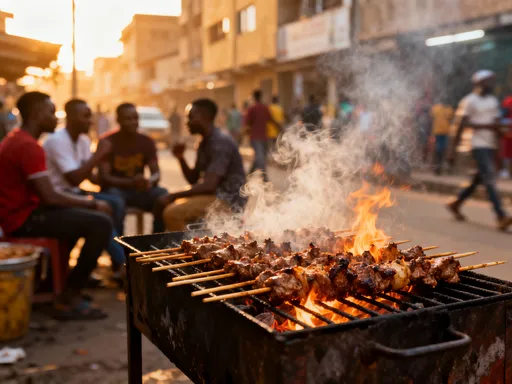
If there’s one food that captures the spirit of Lagos street culture, it’s suya. This spicy, fire-grilled skewered meat isn’t just a snack — it’s a social ritual, a late-night companion, and a cultural icon all rolled into one. Found on nearly every corner after sunset, suya stands glow like beacons, their flames flickering under the stars, drawing in office workers, students, and families alike. The preparation is deceptively simple: thin slices of beef, chicken, or even goat are marinated in a blend of ground peanuts and a fiery mix of spices known as *yaji*, then grilled over open charcoal. But the result is anything but ordinary — a smoky, spicy, deeply savory bite that lingers on the tongue and keeps you coming back for more.
I tried suya for the first time on a warm Lagos evening in Oshodi, standing beside a group of men in office shirts still damp from the day’s commute. The vendor, a man with calloused hands and a practiced eye, flipped the skewers with precision, brushing on extra *yaji* as the meat crackled over the flames. He handed me two sticks, wrapped in newspaper, with a side of sliced onions and tomatoes. The first bite was a revelation — the charred exterior gave way to tender, juicy meat, and the spice hit me in waves, starting with warmth and building into a steady heat that made me reach for my bottled water. But I didn’t stop. Neither did anyone else around me. We stood together, eating, laughing, wiping sweat from our brows, united by the shared experience of something delicious and deeply satisfying.
Suya isn’t just about taste — it’s about togetherness. It’s the food of after-work gatherings, of weekend hangouts, of late-night conversations that stretch into the early hours. Friends meet at suya spots not just to eat, but to talk, to unwind, to reconnect. It’s common to see groups sharing multiple skewers, passing them around like communion. The act of eating suya becomes a form of bonding — casual, unpretentious, and full of life. For many Lagosians, it’s not a meal, but a moment — a pause in the chaos of the city to enjoy something simple and profoundly good.
The spice blend, *yaji*, is key to suya’s magic. While recipes vary from vendor to vendor, the core ingredients — ground peanuts, cayenne pepper, ginger, garlic, and cloves — create a balance of heat, nuttiness, and warmth that’s impossible to replicate perfectly at home. Some families guard their *yaji* recipes like secrets, passing them down through generations. And while you can buy pre-made versions in supermarkets, nothing compares to the real thing, freshly applied over a live flame. Suya, in this way, is more than food — it’s a living tradition, constantly recreated in the open air, one skewer at a time.
From Jollof Wars to Kitchen Wisdom: Cooking with a Local Family
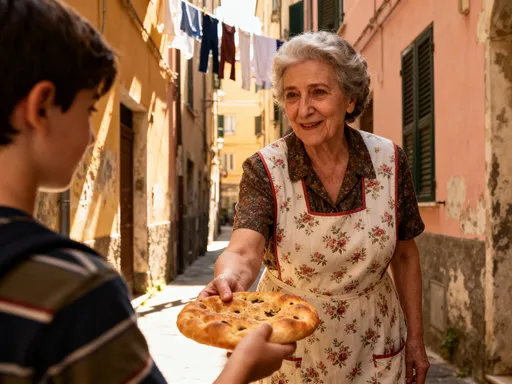
No conversation about Nigerian food is complete without mentioning jollof rice — the dish that sparks playful rivalry across West Africa. Ghanaians claim theirs is better. Nigerians fiercely defend their version. Senegalese remind everyone it originated in their country. But in Lagos, jollof isn’t just a dish — it’s a point of pride, a centerpiece of celebrations, and a test of a cook’s skill. I had the honor of learning how to make it in the kitchen of a grandmother in Surulere, a woman known in her neighborhood for her “foolproof” jollof. At 68, she had been cooking for over five decades, and her hands moved with the confidence of someone who no longer needs to measure — she cooks by sight, by smell, by memory.
Her kitchen was small but spotless, with a gas stove, a few pots, and shelves lined with spices in reused jars. She started by toasting long-grain parboiled rice in a little oil, then added a rich tomato and pepper puree, cooked down slowly until the oil began to separate — a sign, she said, that the base was ready. She stirred in stock, a touch of curry, and a bay leaf, then covered the pot and let it steam. The secret, she insisted, was patience. “No peeping,” she warned with a smile. “Every time you lift the lid, you let the spirit of the rice escape.” After 20 minutes, she unveiled the pot — the rice was fluffy, deeply colored, and fragrant with a hint of smokiness from the bottom layer that had gently caramelized. This slight char, known as *egwu*, is not a mistake — it’s a prize, fought over by family members at dinner.
As we ate, she laughed about the “jollof wars,” calling them “noise for young people with too much time.” To her, the dish wasn’t about competition — it was about love, about feeding people well. “When I make jollof,” she said, “I think of my mother, my children, my grandchildren. This rice has seen weddings, birthdays, funerals. It’s not just food — it’s memory.” Her words stayed with me. In that moment, I realized that jollof rice, for all its fame, is really a vessel — for history, for identity, for the unbroken chain of care that runs through Nigerian families.
The regional pride around jollof is real, but it’s also light-hearted, a way for West Africans to tease each other across borders. Yet beneath the humor is something deeper: a recognition that food is one of the strongest ties to home. Whether cooked in Lagos, Accra, or Dakar, jollof carries the warmth of family kitchens and the echo of generations. And while the debate over who makes it best may never end, one thing is clear — in Lagos, jollof is more than a meal. It’s a celebration of resilience, creativity, and the enduring power of home cooking.
Markets That Feed the City: Inside Mile 12 and Oshodi
To understand Lagos’ food culture, you must walk through its markets. And few places reveal the city’s culinary engine like Mile 12 Market in Ikorodu and Oshodi Main Market. These are not tourist souks with curated crafts — they are working markets, vast and overwhelming, where the city’s food supply comes to life. At dawn, trucks arrive from farms across Nigeria, unloading mountains of plantains, yams, peppers, and leafy greens. Fishermen bring in crates of fresh tilapia, catfish, and dried fish that scent the air with a sharp, briny tang. Spices are sold in open sacks — dried utazi leaves, locust beans, grains of selim — each with its own role in traditional dishes.
Mile 12 Market stretches for blocks, a maze of stalls under corrugated metal roofs. The colors are staggering — red bell peppers piled like rubies, yellow gmelina fruits glowing in the sun, bundles of scent leaves tied with twine. Women in bright Ankara wraps move through the aisles with practiced ease, inspecting produce, haggling firmly but fairly, filling baskets with ingredients for the day’s meals. This is where *buka* owners come to stock their kitchens, where families buy in bulk for weekend gatherings, where the rhythm of Lagosian life is set by the seasons of harvest and the flow of supply.
Oshodi Market, though smaller, is no less vital. Located along a major transit hub, it’s a crossroads where food from the north meets flavors from the south. Here, you’ll find Hausa women selling tuwo and miyan kuka, Yoruba vendors with ewedu and amala, and Igbo traders offering utara soup and abacha. The market hums with activity from morning until late evening, a place where commerce and community blend seamlessly. It’s also a sensory education — the feel of a ripe plantain, the smell of dried fish, the sound of women grinding peppers in electric blenders.
For visitors, exploring these markets can be intimidating, but it’s also one of the most rewarding experiences in Lagos. To do it respectfully, go early — between 7 and 9 a.m. — when the heat is bearable and vendors are most welcoming. Bring small bills for purchases, and don’t be afraid to haggle gently; it’s expected, but not aggressive. Watch how locals interact — a smile, a greeting in the local language, goes a long way. And always ask before taking photos. These markets aren’t performances — they’re workplaces, homes, and lifelines. When you shop here, you’re not just buying food — you’re supporting the backbone of Lagos’ culinary culture.
Seafood Straight from the Creek: A Day in Ikorodu
Just an hour’s drive from central Lagos lies Ikorodu, a town where the city’s pace slows and the water takes center stage. Along the banks of the lagoon, small fishing communities rise on stilts, connected by wooden planks and canoes. At 5 a.m., the fishermen are already out, casting nets into the mist-covered water, returning with silver catches that glisten in the rising sun. This is where some of Lagos’ freshest seafood begins — not in freezers, but in the hands of men who know the tides like the backs of their hands.
I joined a fisherman named Tunde for a morning on the water. He spoke little, but his movements told a story — the careful knotting of the net, the quiet patience as he waited for the pull. By 8 a.m., we were back at the shore, where women cleaned the fish with swift, sure hands, scaling and gutting them in minutes. Some would go to smokehouses, where they’d be dried over low fires for preservation. Others would be sold fresh, carried in baskets to local markets or cooked on the spot.
By noon, I was sitting on a plastic stool at a waterfront *buka*, eating grilled tilapia with a side of plantain and a fiery pepper sauce. The fish was seasoned simply — salt, pepper, onions — and grilled over coconut husks, giving it a subtle sweetness. I ate with my hands, peeling the flesh away from the bone, dipping it in the sauce. A cold bottle of malt drink sat beside me, condensation dripping onto the wooden table. Around me, families laughed, children played, and the water shimmered under the sun. It was one of the most peaceful meals I’ve ever had — simple, honest, deeply satisfying.
This coastal food system is built on tradition and sustainability. Fishermen follow seasonal patterns, avoiding overfishing. Women use every part of the catch — nothing is wasted. And the cooking methods, passed down for generations, enhance flavor without masking freshness. In a world where seafood often travels thousands of miles before reaching the plate, Ikorodu reminds us of the beauty of proximity — of eating what’s local, what’s fresh, what’s real. It’s a model of food culture that values balance, respect, and community — lessons that extend far beyond the kitchen.
Hidden Gems: The Bukas and Spots Only Locals Know
While Lagos is full of new fusion restaurants and trendy cafes, the most memorable meals often come from places that don’t look like much at all. In Ajegunle, a densely populated neighborhood often overlooked by visitors, I found a *buka* run by two sisters who have been serving amala and ewedu for over 30 years. The dining area is a covered patio with plastic chairs, but the food is extraordinary — the amala smooth and rich, the ewedu thick and velvety, the beef tender after hours of slow cooking. Customers line up daily, not for novelty, but for consistency and soul.
Another gem is a tiny stall in Yaba that specializes in egusi soup with assorted meat. The owner, a woman named Mama Nkechi, uses a family recipe that includes bitter leaf for depth and a touch of stock fish for umami. She serves it with pounded yam, handmade every morning, and a side of fresh avocado. It’s the kind of meal that makes you close your eyes with each bite — not because it’s fancy, but because it’s honest, balanced, and full of care.
These hidden spots offer a chance to taste regional Nigerian dishes that aren’t always on tourist menus. Egusi, made from melon seeds, is nutty and hearty, perfect with a starchy swallow like fufu. Efo riro, a spinach-based stew, is bright with peppers and onions, often cooked with palm oil and smoked fish. Amala, made from yam flour, has a deep, earthy flavor that pairs perfectly with rich soups. Each dish reflects the agricultural and cultural roots of its region, yet they all belong in Lagos, a city that welcomes every corner of Nigeria.
For travelers seeking these experiences, a few practical notes help. First, look for busy stalls — high turnover means fresh food. Second, carry cash; most *bukas* don’t accept cards. Third, observe hygiene — clean hands, covered food, and running water nearby are good signs. And finally, go during peak hours — lunchtime between 12 and 2 p.m., or dinner around 7 p.m. — when the food is freshly cooked and the energy is high. These places aren’t hidden because they’re secretive — they’re hidden because they don’t need to advertise. Their reputation is built on flavor, one satisfied customer at a time.
How to Eat Like a True Lagger: A Traveler’s Practical Guide
To truly experience Lagos’ food culture, you need more than a sense of adventure — you need a few key tips to navigate with respect and comfort. First, embrace the local way of eating: with your hands. While forks are available, many dishes — especially swallows like amala, eba, or pounded yam — are meant to be eaten by hand. Wash thoroughly before and after, and use your right hand, as the left is traditionally considered less clean. Don’t be shy — locals appreciate the effort, and it deepens the experience.
Etiquette matters. Say “ese o” when you’re served, and “kaaro” if it’s morning — small phrases that show respect. Sharing food is common, so don’t be surprised if someone offers you a bite of their meal. If you’re invited into a home, bringing a small gift — like fruit or a bottle of drink — is a kind gesture. And remember, meals are social — don’t rush. Take time to talk, to laugh, to be present.
For safety, stick to bottled water and avoid ice unless you’re sure it’s made from purified water. Choose busy food stalls with high turnover — this reduces the risk of food sitting out too long. If you’re sensitive to spice, ask for “less pepper” — most vendors are happy to adjust. And pace yourself — Lagosian meals are rich, flavorful, and often heavy. It’s okay to eat slowly, to save room for another round later.
For a three-day food itinerary, start Day 1 in Surulere: breakfast at a local *buka* with moimoi and pap, lunch with jollof rice and chicken, dinner with suya and malt. Day 2, head to Ikorodu: join fishermen at dawn, eat grilled fish by the creek, visit Mile 12 Market, and end with egusi soup in Ajegunle. Day 3, explore Yaba: try puff-puff and akara for breakfast, have efo riro and eba for lunch, and close with a home-cooked meal if you’ve made a local friend. This isn’t about ticking boxes — it’s about immersion, connection, and the joy of discovering a city one bite at a time.
Conclusion
Lagos’ cuisine is more than sustenance — it’s rhythm, memory, and pride served on a plate. By stepping into its food culture, travelers don’t just taste a place; they connect with its pulse. The real magic isn’t in perfection — it’s in the smoke, the sweat, the shared laughter over a pot of soup. It’s in the grandmother who stirs the jollof with decades of wisdom, the fisherman who knows the tides, the vendor who grills suya under the stars. These are the keepers of tradition, the unsung heroes of a city that feeds its soul through flavor. Go not just to eat, but to belong — even if just for one unforgettable meal. In Lagos, every bite is an invitation to come closer, to sit down, and to be part of something alive, vibrant, and deeply human.